
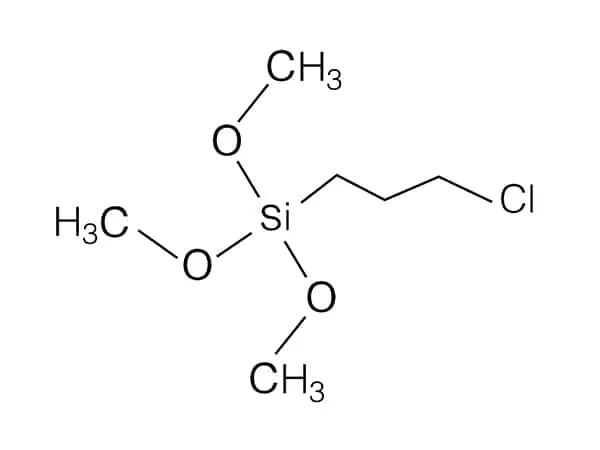
Inorganic fillers like wollastonite, aluminum trihydroxide, and silica are essential for reinforcing polymers and reducing costs. However, their hydrophilic nature often conflicts with hydrophobic polymer matrices. Alkoxy silicone fluid bridges this incompatibility .
Surface Modification Process: When applied to filler surfaces, the alkoxy groups react with hydroxyl groups on the mineral surface, creating a hydrophobic, organophilic coating. This transforms the filler from water-loving to polymer-loving, dramatically improving composite properties .
Measurable Improvements:
Better dispersion: Treated fillers disperse more uniformly in polymers, eliminating agglomerates that weaken finished parts
Reduced water absorption: Hydrophobic modification prevents moisture from wicking along the filler-matrix interface
Improved mechanical properties: Better interfacial bonding translates to higher tensile strength and impact resistance
Applications: Used in wire and cable compounds (where aluminum trihydroxide provides flame retardance), engineering plastics, and rubber compounds requiring reinforcement.
Copyright © 2026 by Qingdao Hengda Chemical New Material Co., Ltd. All Rights Reserved